Flex PCB Manufacturer Process and What You Should Know
The flex pcb manufacturer process is different from the rigid PCB fabrication and assembly processes. The main difference is that a flexible PCB has a base material that is very thin and flexible, often made from polyimide film. The substrate is also coated with a photosensitive etch resist, which has the desired mask pattern printed on it. A UV light source is used to expose and develop the resist, which is then chemically etched away to reveal the copper on the substrate. The remaining copper is plated and chemically etched to form the circuit pattern on the bare board.
When the bare circuit board is ready for component mounting, the manufacturer will apply an adhesive to the top surface of the substrate. The adhesive can be made from acrylic, epoxy, or any other type of pressure-sensitive adhesive. This adhesive helps hold the components to the bare board during soldering and final testing.
During this stage, the conductive paths on the flex circuit are routed. A common way to do this is by using a CAD software program that provides an intuitive and efficient layout for your project. The design will also include any specific requirements for bending and flexing of the circuit board.
Routing a flex circuit can be difficult due to the varying thicknesses and materials of the underlying layers. It is essential that the designer routes traces with appropriate widths and lengths to prevent stress concentration spots that could damage the copper traces. It is also a good idea to route any angled traces with large bend radiuses, rather than with sharp angles that can reduce the longevity of the circuit. In addition, it is recommended that traces be spaced apart, and not stacked adjacently. This helps to avoid the stresses that can cause l-beaming, which may lead to trace copper breakage.
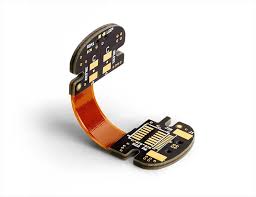
The Flex PCB Manufacturer Process and What You Should Know
Once the circuit is plated and routed, it is ready to be assembled with the components. Depending on the type of components, the flex circuit manufacturer may choose to mount them by SMT (Surface Mount Technology) or through-hole technology. SMT technology is the preferred method of component attachment because it allows for faster production times.
Before the flex circuit is shipped out, it is tested to ensure that it meets all of its mechanical and electrical specifications. This step is a vital part of the manufacturing process, and a reputable flex circuit board manufacturer should be able to provide comprehensive test results and documentation. This is how you can be sure that your flex circuit board is free from defects and is of the highest quality.
The flexibility of the PCB substrate adds complexity to the soldering process, as it must withstand the mechanical stresses associated with bending and flexing without compromising the integrity of the solder joints. Therefore, the solder paste used in flex PCB manufacturing must exhibit not only excellent electrical and thermal conductivity but also mechanical reliability to accommodate the flexing behavior of the substrate.
In conclusion, solder paste is a critical component in the manufacturing processes of flex PCBs, facilitating precise component placement and reliable soldering connections in these versatile and adaptable electronic assemblies. Its properties directly impact the quality, reliability, and performance of flex PCBs in various applications, from consumer electronics to aerospace and medical devices.