Can pcb manufacturing assembly be used
The price of pcb manufacturing assembly can vary widely depending on the labor cost, design complexity, rates and other factors. To keep the costs down, it’s important to plan ahead and understand what the production process will require. Clearly specifying a detailed set of requirements will help companies stay on budget and avoid costly mistakes that could lead to project delays or even product failures.
Regardless of the complexity of your design, there are some fixed production costs that must be taken into account. These are often related to the number of boards that need to be produced and include setup costs for production tools, design review, stencil creation and other costs that are amortized across an entire run. This will help reduce your final PCB assembly cost and increase your profits.
Another factor that influences pcb manufacturing assembly is the type of components used. Surface mount technology (SMT) is more efficient and cost-effective, but through-hole technologies are sometimes necessary due to the physical dimensions of certain parts. It is important to be aware of the type of production that your project will require, and to choose a manufacturer that specializes in it.
Can pcb manufacturing assembly be used in flexible printed displays?
Once a PCB has been assembled, it is tested electronically and visually to ensure that it meets all of the required specifications. This step is also important for catching any errors in the design, which can be difficult to spot and may cause problems with the finished product. The more tests a company performs, the fewer errors will be discovered after production and rework, which saves time and money.
A final consideration for pcb manufacturing assembly is the type and amount of solder paste that is used. This is a crucial step that can significantly affect the final cost of your product, as it impacts the ease with which the board can be assembled. Too much solder can create bridging between pads and components, while too little can lead to a dry solder joint. It’s also important to consider the type of solder used, as some types are more expensive than others.
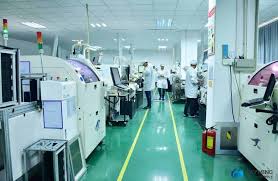
After the solder paste is applied, the electrical components are mounted to the pcb using a pick and place machine. These machines are loaded with the customer’s provided Bill Of Materials, and then programed to recognize each part. The machine’s heads then move to precisely match the X and Y center position of each component on the pcb.
The pcb is then placed in a secure fixture to prevent shifting during the reflow soldering process. The fixture should provide a non-slip surface and be able to withstand heat. Finally, the pcb is inspected and tested again to ensure that all parts are present and working correctly. Once the pcb passes the final quality check, it is packaged for shipment. The end-to-end services offered by some manufacturers can detect errors and issues early in the process, helping to reduce rework and production costs. This can improve the overall efficiency of the production process and result in higher quality and more reliable products.