
Bach Piano
Whether they are the mighty Toccatas and Fugues of Book I of Bach’s Well-Tempered Clavier or the gentle Preludes and Chorales of his church music, most pianists will have to tackle some bach piano transcriptions at some point. These are often tricky, demanding both a high level of technical prowess and a keen eye for phrasing. However, they can also be a lot of fun to play and can help you get to know Bach’s music better.
A good place to start is with the Inventions and Sinfonias. These teaching pieces are short and easy to learn, but they can be great practice for both tackling complex finger grouping and developing Bach-style phrasing. The C major Invention, for example, has a simple melodic line that is repeated, broken up, and even turned upside down in order to generate musical material for the entire piece. This is a common practice in counterpoint-based composition and is why many musicians refer to Bach as the master of canonic writing.
Another way to get acquainted with Bach’s style is by learning his sarabandes. This is a common form of Baroque music, and the sarabandes from Book II of the Well-Tempered Clavier are particularly renowned. The sarabande in G major is a nice one to try because it is not too difficult and is a great practice exercise for figuring out how to string similar’sequences’ together up or down a scale. Sequences can look scary, but if you break them down to their basic shapes and see how they are constructed, they become a lot easier to understand and play.
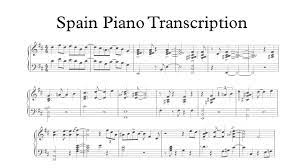
Bach Piano Transcriptions
It is worth noting that the sarabande in G major was originally written for harpsichord and requires special attention to how the bass notes are played. You will notice that the left hand is often holding down low notes while playing higher ones above it (as in the treble clef). This is necessary to maintain the integrity of the chord structure as the piece moves up and down the scale.
Once you have mastered the basics, try adding in the right hand parts. This will require some practice to master since the left hand is constantly moving up and down the keyboard, as well as jumping back and forth between the octaves. The key here is to practice the left hand a little bit at a time and not jump around too much.
Piano transcriptions of Bach’s work have been made by many famous performers. For example, Wendy Carlos transcribed some of the Toccatas and Fugues from Book I of the WTC into her Moog synthesizer for her album Switched-On Bach. Violinists interested in historically informed performance have transcribed pieces for their instrument, such as Andrew Manze’s version of the Passacaglia from Bach’s Cello Suite #1 in G major. And of course, Bach’s music has been transcribed for orchestra as well, including the Toccata and Fugue in D minor by Charles Gounod.


