flexible PCB supplier
The materials used in a flex PCB can have a significant impact on heat dissipation, signal integrity, load-bearing capacity, and other electrical characteristics. The material also has a direct effect on the overall cost of a flex circuit board.
A flexible circuit board can be made out of a wide variety of films, insulators, and adhesives. A flex PCB must be made to withstand dynamic bending, so the layers of the substrate must be robust enough to resist cracking or breaking. A rigid PCB, on the other hand, will only need to withstand static bending and can be made from much thinner materials.
To achieve the right level of flexibility, a flexible pcb supplier must use a dielectric material with low coefficient of thermal expansion (CTE). The most common choice is polyimide (PI). PI has good strength and durability for a flex circuit, and it can withstand bending and temperature changes. It also has adequate chemical resistance and is a good choice for use in mobile devices like tablets, calculators, and cameras.
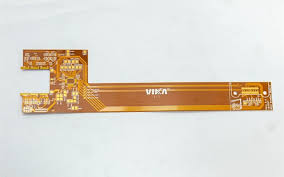
What materials does a flexible PCB supplier use?
Another type of flex circuit material is polyester film (PEL). It is often used as an alternative to PI, but it does not have the same mechanical strength. The main advantage of PEL is its lower cost. However, it is less durable than PI and does not have the same UL spontaneous combustion rating.
Both PI and PEL can be used as base layers for flexible circuits. A thin dielectric coverlay is then laminated over the copper foil for insulation and protection. The coverlay is usually made out of a high-performance material like Kapton or polyester. Acrylic or epoxy based adhesives are then used to bond the copper foil and coverlay to the substrate.
In multilayer constructions, additional insulating layers are added to the flex circuit to reduce the likelihood of wrinkling and buckling. Depending on the complexity of the layout, these layers can be made out of various materials, including polyimide, glass, and ceramic. In addition, a solder mask is applied to the conductor pattern for insulation and anti-oxidation. It is then plated with copper to ensure a solid and reliable connection between the traces.
One of the primary advantages of flexible PCBs is their ability to bend and twist, allowing them to be used in applications where traditional rigid PCBs would be unsuitable. This flexibility makes them ideal for use in wearable electronics, smartphones, and other compact devices where space is at a premium. The right flexible PCB supplier understands these unique requirements and offers solutions that ensure the integrity and functionality of the circuit, even under challenging conditions.
Printed circuit boards are used in many different applications and must be able to withstand the rigors of everyday use. A flex PCB is ideal for these applications because it can be easily bent to fit into small spaces and is less likely to crack or break under normal operation. The aforementioned factors make flex circuits a great choice for automobiles, electronics, and medical equipment. A flex circuit also offers several benefits over rigid PCBs, such as being lightweight, space-saving, and allowing for easy reworking.